
Last Updated on November 24, 2026 by babyfinds
Disclosure: As an Amazon Associate I earn from qualifying purchases. Links in this guide go to Amazon, where details and availability can change.
The best sleep setup for a baby’s first months is three pieces: an arms-up swaddle, a small sound machine, and true blackout curtains. Together they give the same cues in the same order every night, so bedtime becomes predictable. Below are the exact picks from our Baby Sleep Essentials list, with what we like and what to watch for.
Three quiet helpers — an arms-up swaddle, a small sound machine and true blackout curtains — and the routine that finally made our evenings predictable.
Every new mom knows the 7 p.m. feeling: you are exhausted, the baby is overtired, and the room is still bright from the evening sun. With my first baby I tried everything at once. By baby number three, I had learned that a sleep routine is not a long list of products — it is the same few cues, in the same order, every night. If the safety rules feel fuzzy, start with Safe Sleep Basics: 5 Rules Every New Parent Should Know.
This guide walks through the three pieces that anchor our routine — a swaddle that lets baby sleep arms-up, gentle white noise, and a genuinely dark room — plus the other sleep essentials on our list, and how to choose between them. For the room around the crib, see Nursery Storage Ideas: Baskets, an Over-Door Organizer & Scalloped Shelves.
How we chose these picks
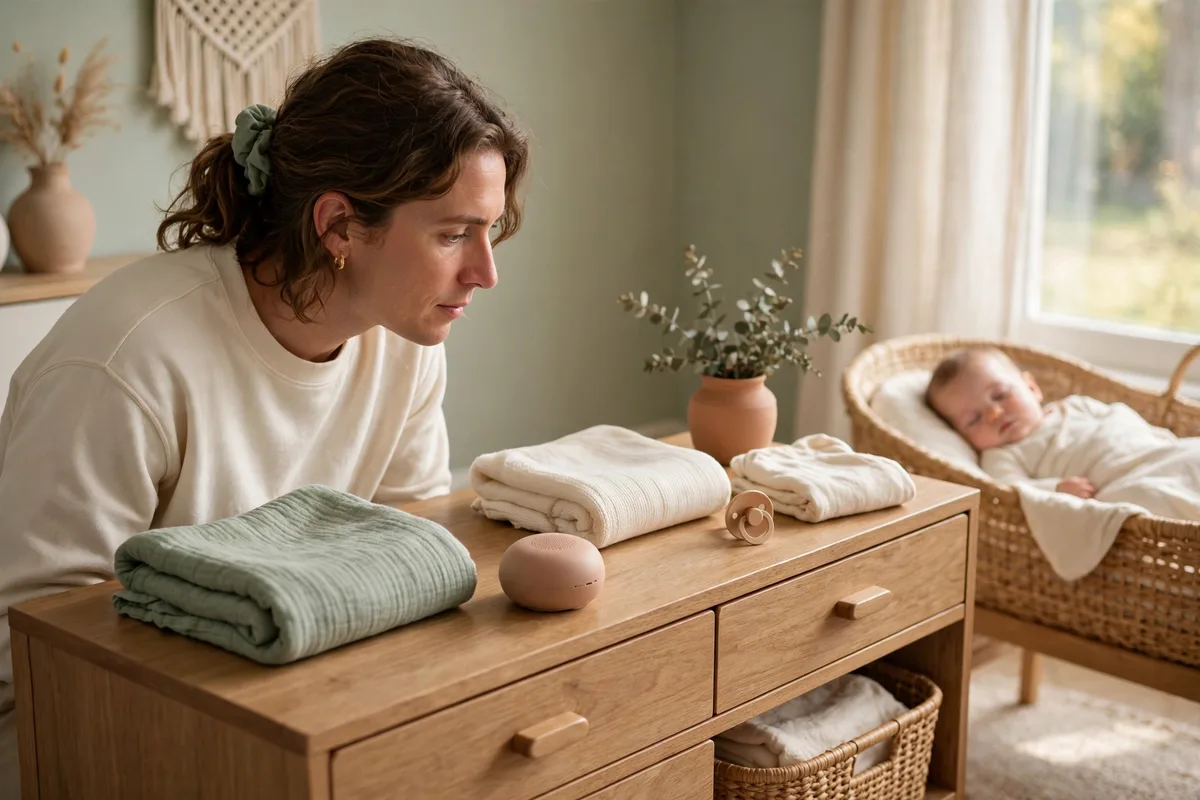
How we choose: every pick on this list comes from our own Amazon Idea Lists, judged against the same fixed criteria for its category and checked against AAP, CPSC or NHS guidance where it applies. Where we have used a product in our own home, we say so in the text; where we have not, we say what the product is for and what to watch for instead of pretending otherwise.
- Safe first: follows AAP safe-sleep basics — back to sleep, a firm flat surface, and nothing loose in the crib
- Works for naps and nights, not just one perfect bedtime
- Easy to use one-handed at 2 a.m., because that is real life
- Washable or wipe-clean — sleep gear gets a lot of laundry miles
- Fits a standard crib and a small nursery
Prices and availability change — check Amazon for the current price.
The picks, one by one
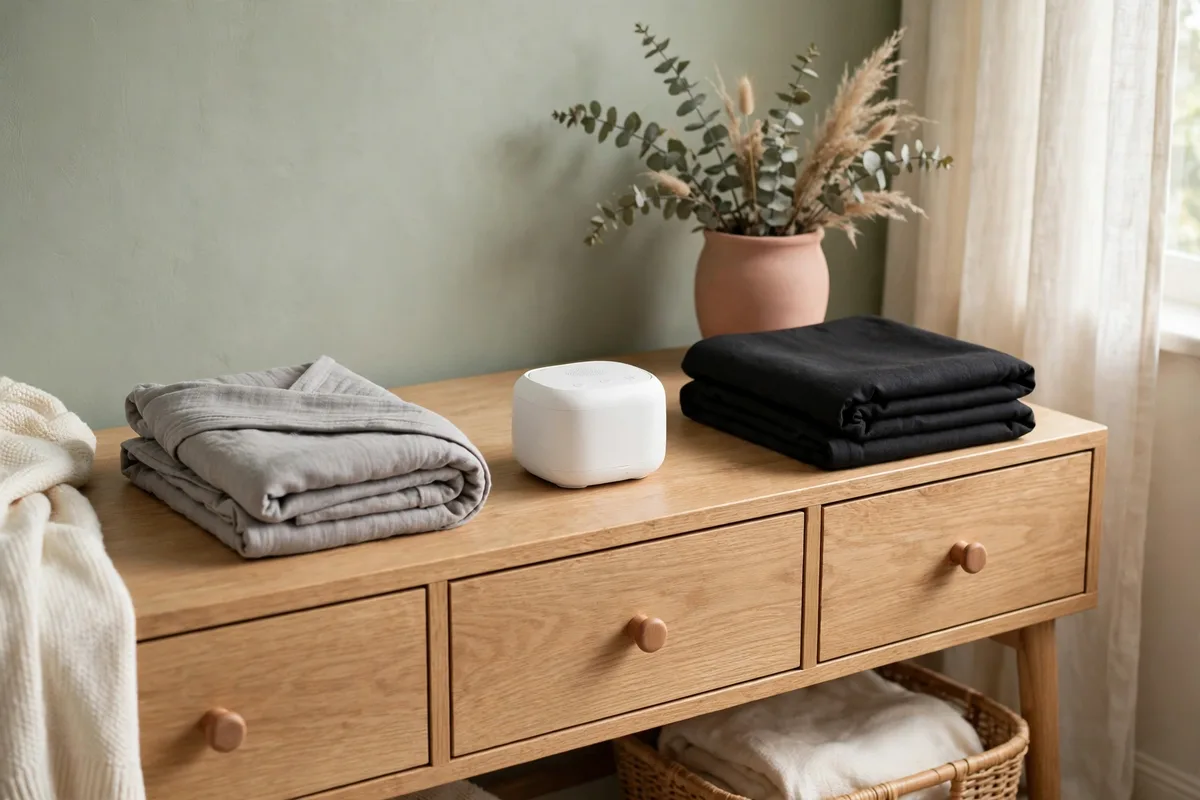
Love to Dream Swaddle Up, 1.0 TOG — Best for arms-up sleepers
Why we like it: Some babies fight a traditional arms-down swaddle from day one. The Swaddle Up’s arms-up shape lets them touch their face and self-soothe while still feeling snug, and the two-way zipper makes night changes fast without fully unwrapping.
Keep in mind: It is a sleep sack, not a blanket — once your baby shows signs of rolling, it is time to move to the transition version with removable wings. Check the weight guide rather than age alone when choosing a size.
jaroco Portable Baby Sound Machine — Best for naps anywhere
Why we like it: Small, simple and portable, so the same familiar sound follows baby from crib to stroller to grandma’s house. Consistent white noise masks the doorbell, the dog and the older siblings — the three sounds that ended most naps in our house.
Keep in mind: Follow the AAP’s gentle approach: place it as far from the crib as the room allows, keep the volume as low as still works, and avoid running it all night at high volume.
Swandream 100% Blackout Curtains — Best for a truly dark room
Why we like it: These are double-layer curtains that actually block daylight, which matters for early summer sunrises and bright nap times. A dark room is the cue that helped our babies tell a 45-minute nap from a proper sleep stretch.
Keep in mind: Measure your window before ordering and hang them wide and high to stop light leaking around the edges. And keep cords out of reach — or choose a cordless setup — as your baby starts pulling up.
Side-by-side comparison
| Pick | Best for | Standout point | Keep in mind |
|---|---|---|---|
| Love to Dream Swaddle Up | Newborns who startle awake | Arms-up shape, two-way zipper | Move on when baby starts rolling |
| jaroco Sound Machine | Naps at home and on the go | Portable, consistent white noise | Keep it across the room, volume low |
| Swandream Blackout Curtains | Bright rooms, summer evenings | True blackout, double layer | Measure first; mind the cords |
| HelloBaby No WiFi Monitor | Parents who skip WiFi cameras | Camera and audio, no app needed | Also on our Sleep list for peace of mind |
How to build the routine
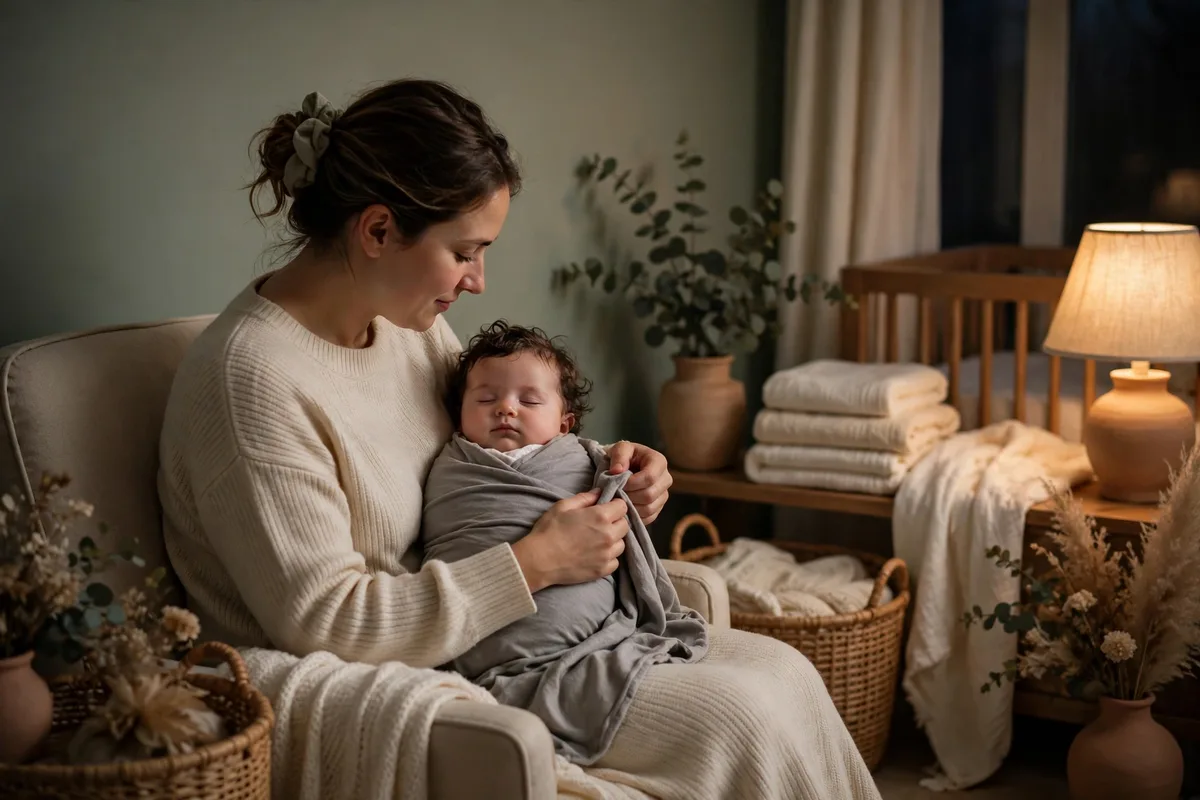
Keep it short and boring: dim the lights, change into pajamas, swaddle, one short song or book, sound machine on, baby down drowsy. Fifteen calm minutes beats an hour of rocking. A calm bath earlier in the evening can help too — see A Gentle Baby Bath Routine: Calm, Warm & Unhurried.
The AAP recommends babies sleep on their back, on a firm, flat mattress with only a fitted sheet — no pillows, blankets or toys in the crib until after 12 months. Room-sharing (baby in their own crib or bassinet beside your bed) is recommended for at least the first 6 months.
Dress baby in one more layer than you are wearing and skip loose blankets; a well-fitting sleep sack does the job. If you use a sound machine, keep it across the room at the lowest volume that works.
Parents also ask
Q: Does my baby really need a sound machine to sleep?
A: No — it is a helper, not a requirement. Many babies sleep fine without one. It helps most in noisy homes or for naps, because the steady sound covers sudden household noises. If you use one, the AAP advises placing it as far from your baby as possible, at the lowest effective volume, and not running it all night.
Q: When should I stop swaddling?
A: As soon as your baby shows signs of trying to roll — often around 3–4 months — it is time to transition out of a swaddle to arms-free sleep. The arms-up design buys comfort, not extra time; follow your baby’s milestones, not the calendar.
Q: How dark does the room need to be?
A: Dark enough that you can barely see your hand is a good test for naps. Total blackout is not magic, but consistent darkness is one of the clearest day/night signals for a young baby.
Q: What room temperature is best?
A: The NHS suggests around 16–20°C (61–68°F). The AAP does not give a number — it simply advises against overheating. A room thermometer (like the TempPro on our Safety list) takes the guesswork out.
About the author
Hi, I’m Sarah — a mom of three. I share the baby essentials that actually helped us, so other moms can find what they need — faster, and with less guesswork. Every pick on BabyFinds comes from our own lists, and every care tip is checked against AAP, CPSC or NHS guidance.