
Last Updated on November 24, 2026 by babyfinds
The AAP’s safe-sleep guidance, in plain English — back to sleep, a boring crib, and a cool, calm room.
Safe sleep advice can sound like a long list of don’ts. Underneath it are five simple habits that cover almost everything the American Academy of Pediatrics (AAP) recommends for babies up to 12 months. General guidance only — your pediatrician knows your baby. Once the rules are clear, put them into a nightly rhythm with A Simple Baby Sleep Routine: Swaddle, Sound & a Dark Room.
1. Back to sleep, every sleep

Always lay your baby on their back for naps and at night, right up to their first birthday — and if they roll over on their own once they can roll both ways, you can leave them be.
Source: AAP — Safe Sleep: 9 Ways to Reduce a Baby’s Risk of SIDS & Suffocation
2. Keep the crib beautifully boring
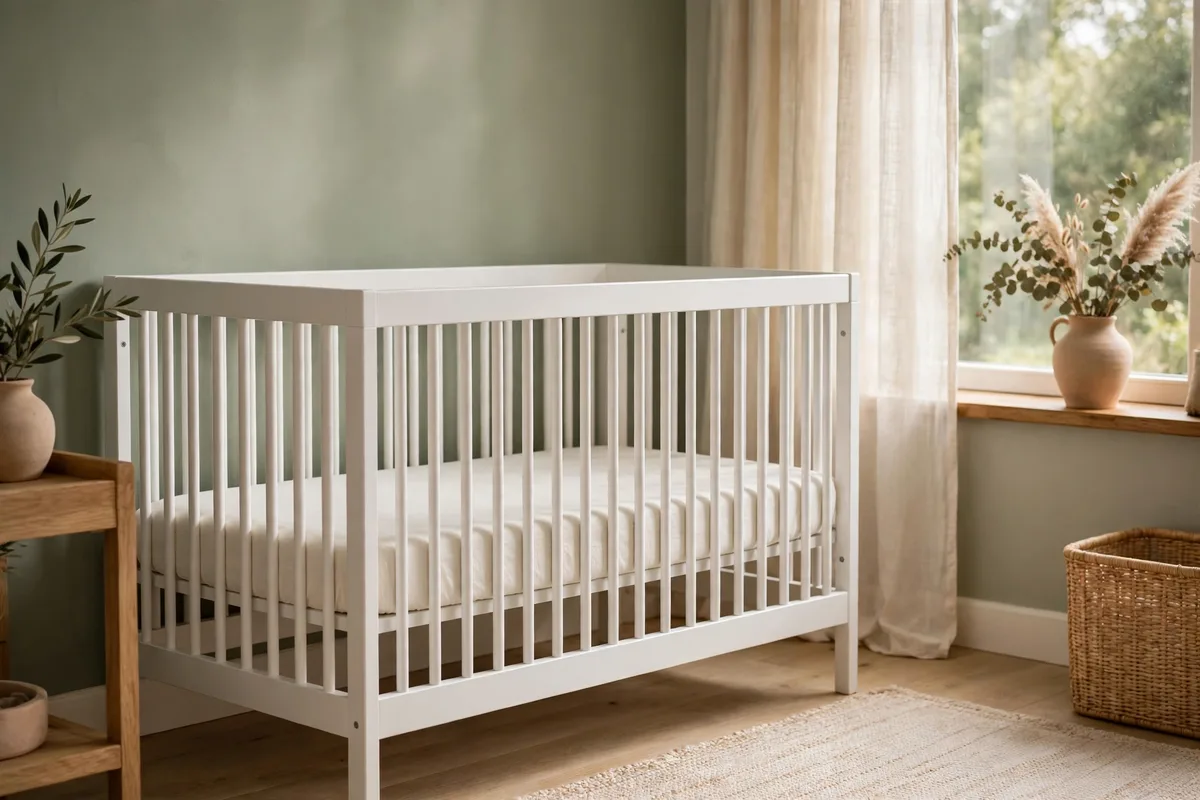
A firm, flat mattress with just a tight-fitted sheet is all your baby needs — no pillows, blankets, bumpers, or stuffed friends in the sleep space until after 12 months. Keeping spare sheets and sleep sacks close by — but out of the crib — is easier with Nursery Storage Ideas: Baskets, an Over-Door Organizer & Scalloped Shelves.
Source: AAP — Safe Sleep (HealthyChildren.org)
3. Share the room, not the bed
Keep your baby’s own crib or bassinet right beside your bed for at least the first 6 months (ideally up to a year) — close enough for a cuddle or a feed, but on their own safe surface.
Source: AAP — Safe Sleep (HealthyChildren.org)
4. Cool and comfy beats warm and snug
Dress your little one in just one more layer than you’re wearing, and skip loose blankets — a well-fitting sleep sack does the job safely — because overheating raises SIDS risk, so check for sweating or a hot chest.
Source: AAP — Safe Sleep (HealthyChildren.org)
5. Aim for a cool room, and go gentle with white noise
The NHS suggests keeping the room around 16–20°C (61–68°F) — the AAP gives no number, just ‘a comfortable temperature’ and no overheating. If you use a sound machine, the AAP says put it as far from your baby as possible, keep the volume as low as possible, and don’t run it all night.
Source: NHS — Sudden infant death syndrome (SIDS) · AAP noise guidance
These tips are general guidance drawn from the AAP, CPSC and NHS — not medical advice. If anything about your baby worries you, check with your pediatrician. For the rest of the house, work through Babyproofing Your Home: Where to Start, in the Right Order.
About the author
Hi, I’m Sarah — a mom of three. I share the baby essentials that actually helped us, so other moms can find what they need — faster, and with less guesswork. Every pick on BabyFinds comes from our own lists, and every care tip is checked against AAP, CPSC or NHS guidance.