
Last Updated on November 25, 2026 by babyfinds
Anchor first, gate the stairs, lock the cabinets — the CPSC and AAP babyproofing priorities, sequenced by risk.
Start before your baby gets mobile — often around 6 months — and do the heaviest, highest-risk jobs first. This order is arranged by severity from the CPSC’s childproofing guidance and the AAP’s home-safety advice. The twelve picks behind this plan are in Baby Safety Essentials Checklist: 12 Picks for a Safer Home.
1. Anchor first — dressers, bookcases, and TVs can tip
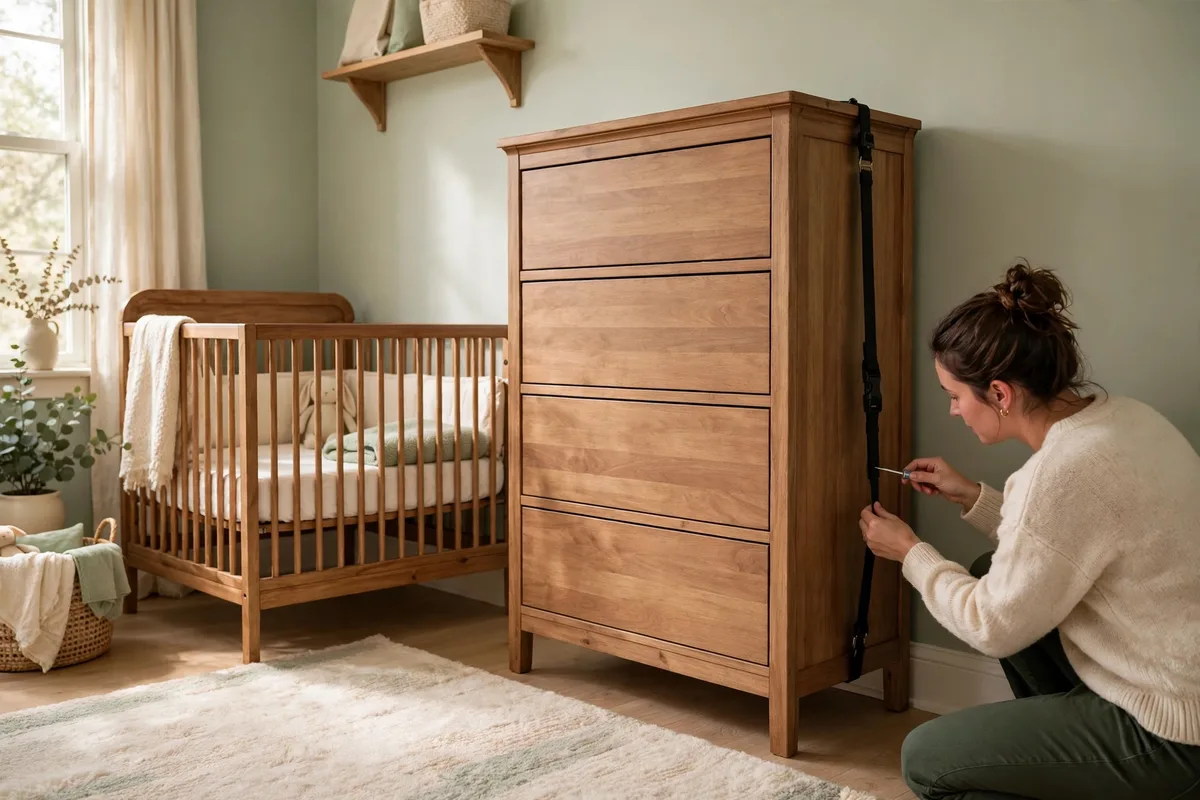 Anchor tall furniture and TVs to the wall or floor, and fit anti-tip brackets on freestanding ranges, because little climbers can pull heavy furniture over in a heartbeat.
Source: CPSC — Childproofing Your Home (Publication #252)
2. Gate the stairs, top and bottom
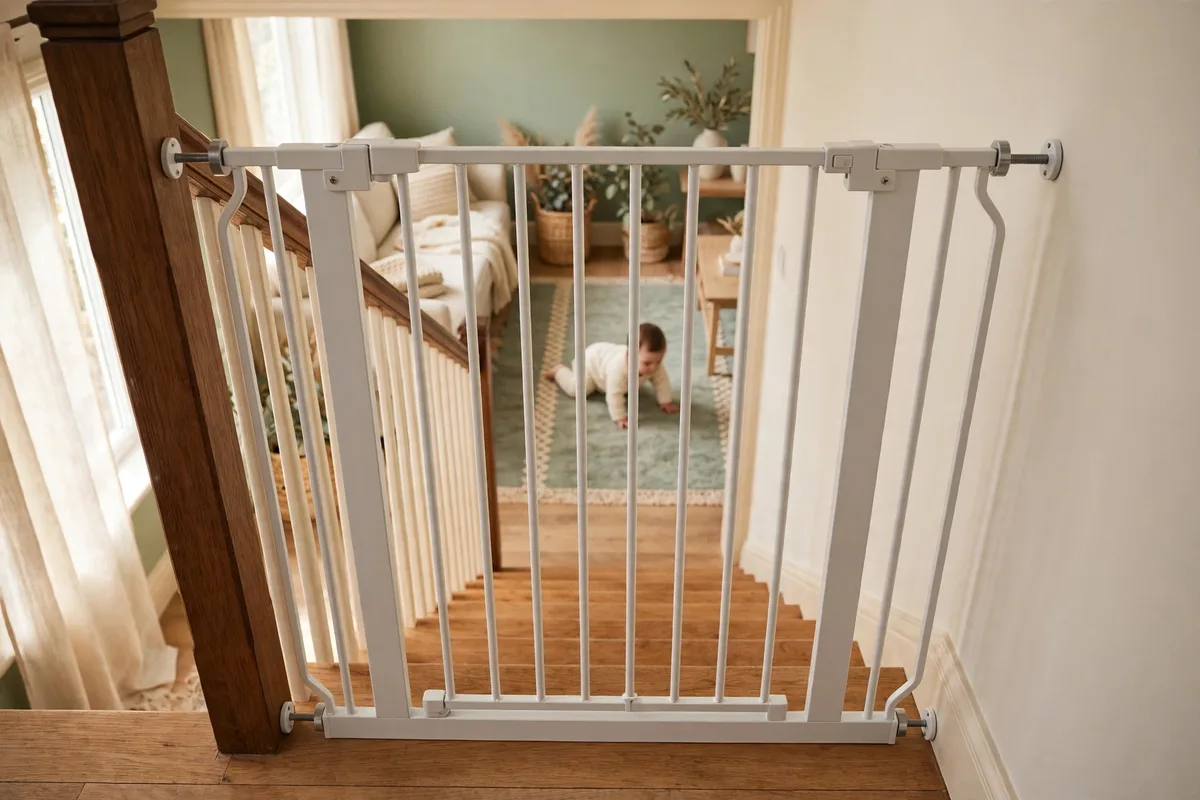 Fit a safety gate at both ends of the stairs as soon as your baby starts crawling. At the top of the stairs, only use a gate that screws into the wall — never a pressure-mounted gate, a pet gate, or an old accordion-style gate.
Source: CPSC — Childproofing Your Home · AAP — Home Safety
3. Lock up the things that can poison or cut
Put safety latches on every cabinet holding medicines, cleaning products, laundry pods, or sharp things — and remember, even child-resistant caps aren’t childproof, so lock them away and out of reach.
Source: CPSC — Childproofing Your Home · AAP — Home Safety
4. Go cordless, guard the windows, and cover the outlets
Swap blinds and curtains for cordless ones (cords can strangle), fit window guards and keep openings to 4 inches or less (screens won’t stop a fall), and cover unused outlets with covers that are hard to pull off and too big to choke on.
Source: CPSC — Childproofing Your Home · AAP — Home Safety
5. Soften the sharp bits and mind the bath
Stick cushioned corner protectors on sharp coffee-table edges, get down on the floor at your baby’s level to spot small choking hazards — including small toys that no longer suit their age; see Baby Toys by Age: 15 First Toys for 0–12 Months & Toddlers — and in the bathroom set the water heater to 120°F or lower and never leave your baby alone in the bath.
Source: AAP — Home Safety · CPSC — Childproofing Your Home
These tips are general guidance drawn from the AAP, CPSC and NHS — not medical advice. If anything about your baby worries you, check with your pediatrician. For the sleep side of safety, see Safe Sleep Basics: 5 Rules Every New Parent Should Know.
About the author
Hi, I’m Sarah — a mom of three. I share the baby essentials that actually helped us, so other moms can find what they need — faster, and with less guesswork. Every pick on BabyFinds comes from our own lists, and every care tip is checked against AAP, CPSC or NHS guidance.