
Last Updated on November 24, 2026 by babyfinds
Disclosure: As an Amazon Associate I earn from qualifying purchases. Links in this guide go to Amazon, where details and availability can change.
The twelve safety essentials on our list cover the risks in the order a mom should tackle them: invisible dangers first, then falling furniture and stairs, then exploring toddlers. Every pick matches CPSC and AAP home-safety guidance. Start at the top and work down. The sleep-room risks are covered in Safe Sleep Basics: 5 Rules Every New Parent Should Know.
From a CO alarm to cordless blinds — the twelve safety essentials on our list, in the order a mom of three would actually tackle them.
Babyproofing feels overwhelming because people talk about it as one giant job. It is not. It is a series of ten-minute fixes, and the smart order is simply: the invisible risks first, then the falling risks, then the exploring-toddler risks. The room-by-room plan is in Babyproofing Your Home: Where to Start, in the Right Order.
Here is the full twelve-piece Baby Safety Essentials list we work from, with honest notes on each — including the Cideny auto-close gate, which we fitted in a living-room doorway, and the Raelitego head protector our toddler wore through the wobbly first-steps stage.
How we chose these picks
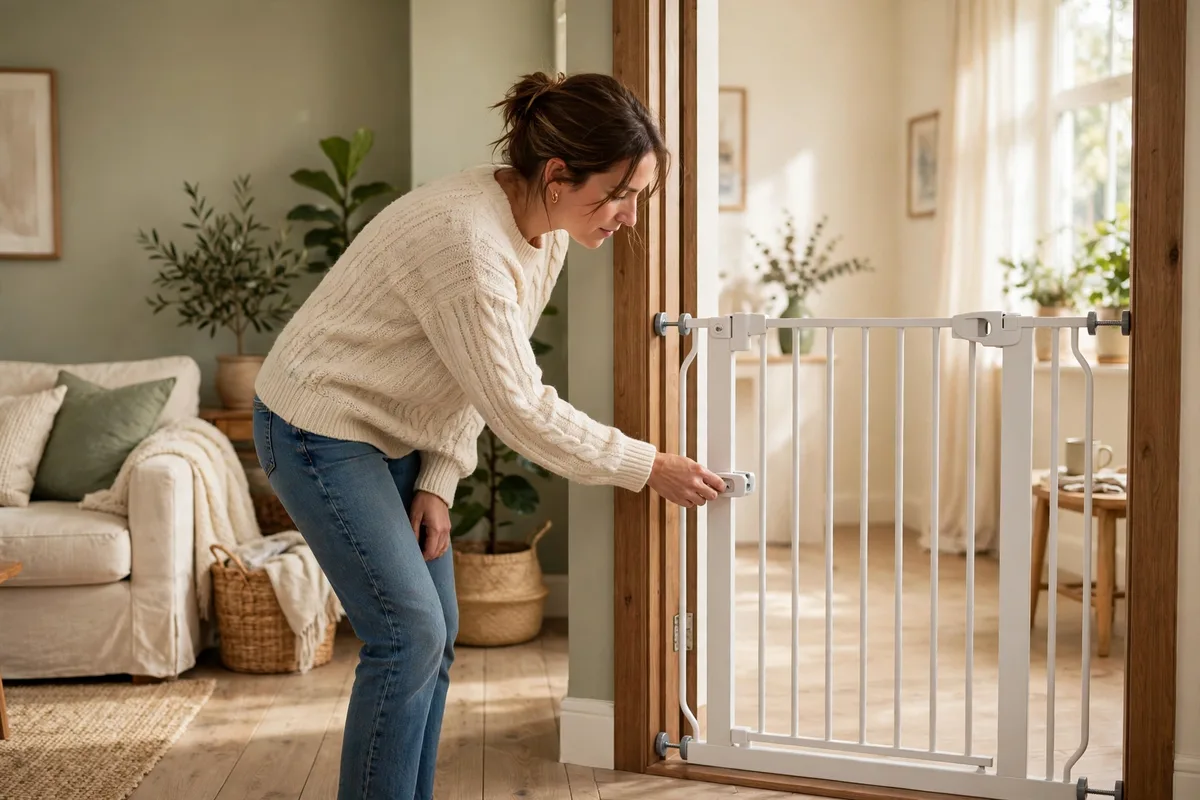
How we choose: every pick on this list comes from our own Amazon Idea Lists, judged against the same fixed criteria for its category and checked against AAP, CPSC or NHS guidance where it applies. Where we have used a product in our own home, we say so in the text; where we have not, we say what the product is for and what to watch for instead of pretending otherwise.
- Ordered by risk, not by room — invisible dangers like carbon monoxide come first
- Matches CPSC and AAP home-safety guidance (anchoring, gates, cordless windows, locked storage)
- Fits standard US doors, windows and cabinets without specialist tools
- Stays useful beyond the crawling stage — toddlers test everything twice
Prices and availability change — check Amazon for the current price.
The picks, one by one
First Alert Plug-In Carbon Monoxide Alarm CO600 — Start here
Why we like it: Carbon monoxide is invisible and odorless, which is exactly why this goes first. It plugs into a standard outlet with battery backup, so protection continues through an outage — no wiring, no excuses.
Keep in mind: An alarm is a warning system, not prevention: have fuel-burning appliances serviced, and test the unit monthly. Place alarms near sleeping areas as your local guidance advises.
TempPro TP50 Digital Hygrometer — Best small helper
Why we like it: One glance tells you the nursery’s temperature and humidity — the two numbers behind most ‘is the room okay?’ worries. It supports the NHS guidance of a 16–20°C sleep room far better than guessing by feel.
Keep in mind: It measures the spot it sits in, so keep it near the crib, away from radiators and direct sun, for a reading that means something.
B&H Baby Bath Thermometer — Bath-time backup
Why we like it: A quick digital check of bath water before baby goes in. We still teach the elbow-or-wrist test first — this is the reassuring second opinion, especially for grandparents and new caregivers.
Keep in mind: A thermometer is an optional helper, not the standard. The AAP and NHS test is your elbow or inner wrist: water should feel warm, not hot, around 37–38°C.
Persilux Cordless Zebra Blinds — Cordless window fix
Why we like it: Window cords are one of the quiet hazards the CPSC calls out by name. These zebra blinds are cordless by design and let you soften daylight for naps without dangling loops at toddler height.
Keep in mind: Measure carefully for an inside or outside mount, and still keep cribs and climbable furniture away from windows — guards and distance do the rest.
ZRFCXE Window Locks, 4 Pack — Simple, effective
Why we like it: Sliding windows that open ‘just a crack’ can open much further to a determined toddler. These locks limit how far a window opens and add a second barrier on the windows you use for fresh air.
Keep in mind: Screens are not safety devices — they keep bugs out, not children in. The CPSC advises window openings of 4 inches or less where young children are present.
Cideny Baby Gate, Auto Close — Best for doorways & stairs
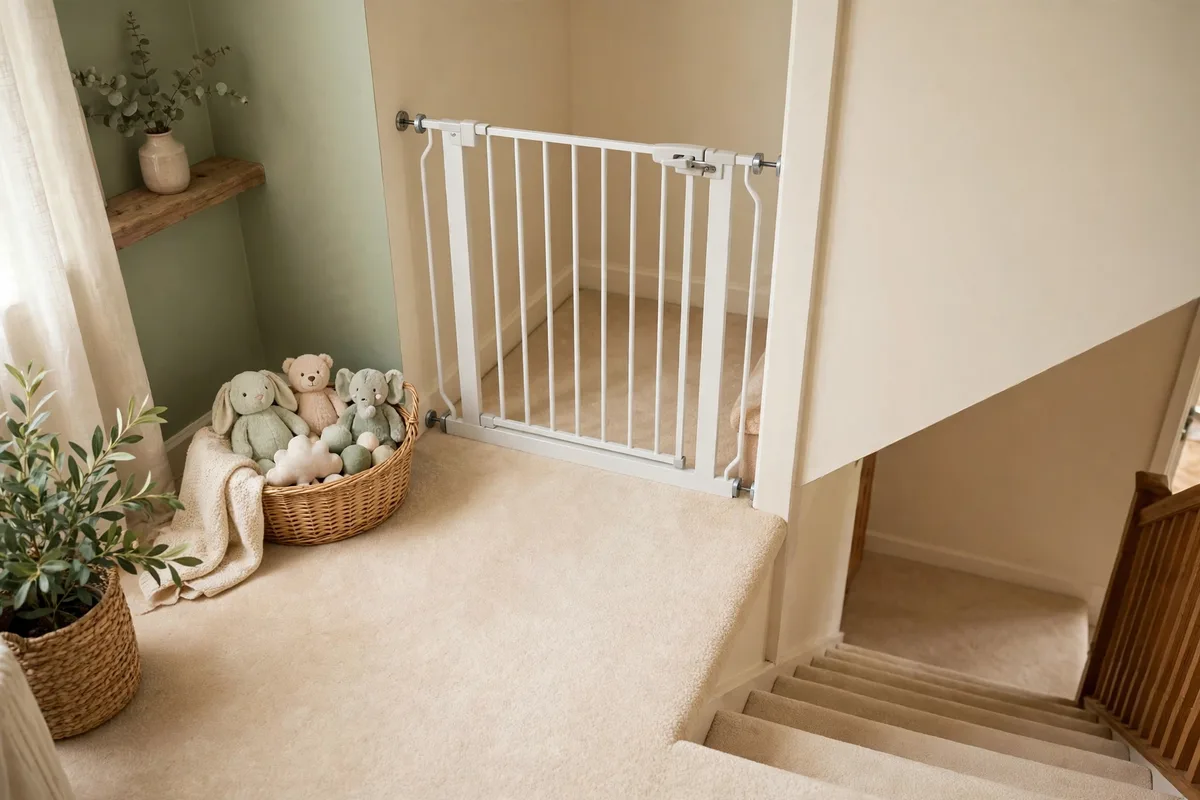
Why we like it: The auto-close door is the feature you appreciate with your hands full of baby and laundry: walk through, and it swings shut and latches behind you. Ours lives in a living-room doorway and has survived two toddlers’ worth of daily traffic.
Keep in mind: At the top of stairs, only use a gate that screws into the wall — never a pressure-mounted gate, a pet gate, or an old accordion-style gate. That is firm CPSC and AAP guidance, not a preference.
Raelitego Baby Head Protector — For the wobbly stage
Why we like it: A soft padded backpack-style protector that cushions the back of the head during the sit-to-stand-to-topple weeks. Our toddler wore it happily, which is the real test — protection only works if it stays on.
Keep in mind: It softens everyday bumps on flat floors; it is not a helmet and never replaces supervision, gates, or padded corners where falls are likely.
Infinno Cabinet Locks, 12 Pack & Skyla Homes Strap Locks, 8 Pack — Lock the low cabinets
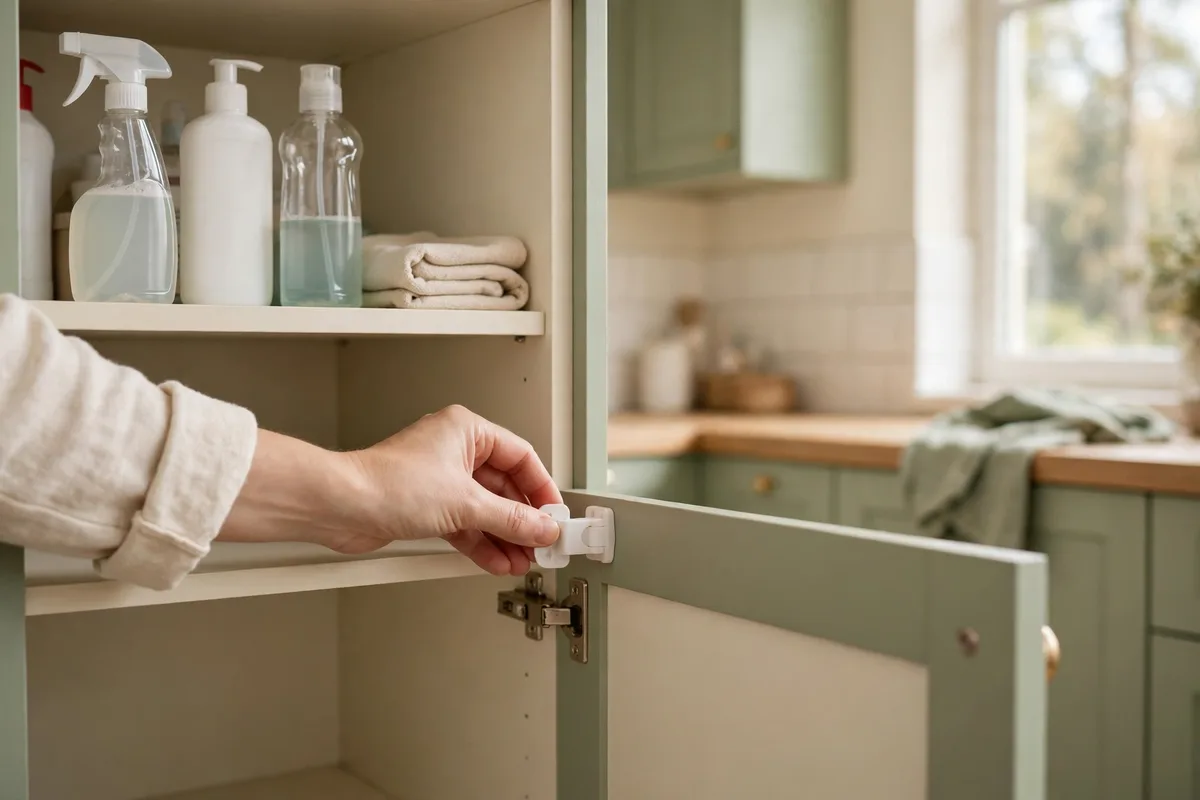
Why we like it: Under-sink cabinets hold the most dangerous everyday items in the house. The Infinno locks suit cabinets and drawers, while the flexible Skyla straps handle corners, appliances and the toilet — between them, most of a kitchen and bathroom is covered.
Keep in mind: Child-resistant is not childproof. Medicines, cleaning products and laundry pods still belong locked away and out of reach, as both the CPSC and AAP stress.
Booda Brand Furniture Anchors, 10 Pack & CalMyotis Corner Protectors — Tip-over & bump duty
Why we like it: Dressers, bookcases and TVs can tip onto a climbing toddler in a heartbeat — anchoring is the CPSC’s number-one furniture fix, and ten anchors cover the tall pieces in most homes. Corner protectors soften the coffee-table edges that sit exactly at new-walker forehead height.
Keep in mind: Anchors only work installed: follow the wall-type instructions, and re-check them when furniture moves. Corner protectors are a cushion, not a cure — clear the climbing routes too.
Wappa Baby Outlet Covers, 50 Pack — The finishing pass
Why we like it: Fifty covers means every unused outlet in the rooms your baby roams — not just the nursery. Choose covers that are hard for little fingers to pull off and too big to be a choking hazard, as the CPSC advises.
Keep in mind: Do a floor-level crawl of each room when you fit them. You will spot the outlet — and the coin, the hair tie, the mystery screw — that adults never see from standing height.
Side-by-side comparison
| Pick | Covers | Do it when | Keep in mind |
|---|---|---|---|
| First Alert CO Alarm | Invisible gas risk | Before baby comes home | Test monthly; alarms warn, not prevent |
| Cideny Gate | Stairs & doorways | As soon as crawling starts | Wall-mounted only at top of stairs |
| Furniture Anchors | Tip-over risk | Before pulling-up stage | Must be fixed into the wall |
| Persilux Cordless Blinds | Window cord risk | Any time — sooner is better | Keep crib away from windows |
| Cabinet & Strap Locks | Poisons & sharps | When cupboards get opened | Locked away beats child-resistant |
The order we worked in
First, the invisible and falling risks: CO alarm fitted, furniture and TVs anchored, water heater set so the hottest tap is no more than 120°F (49°C).
Then barriers: gates at the top and bottom of the stairs as soon as your baby is crawling, window locks on, cordless blinds up.
Finally, the explorer pass: cabinet locks, outlet covers, corner protectors — done on your knees, at baby eye level, room by room. Babyproofing is not a weekend; it is a habit that updates with every new skill your baby shows you. In the nursery itself, keep supplies in reach with Nursery Storage Ideas: Baskets, an Over-Door Organizer & Scalloped Shelves.
Parents also ask
Q: When should I start babyproofing?
A: Before your baby gets mobile — often around 6 months — starting with the highest-risk jobs: anchoring furniture, fitting a CO alarm, and gating the stairs. The CPSC advises installing window guards and locking up poisons before your baby starts exploring on their own.
Q: Pressure-mounted or wall-mounted gate?
A: Pressure-mounted is fine for a doorway between rooms. At the top of stairs, the CPSC and AAP advise a gate that is screwed into the wall — pressure-mounted gates can be pushed over by a determined toddler.
Q: Do I really need a CO alarm if I have a smoke alarm?
A: They detect different things. A smoke alarm will not warn you about carbon monoxide, which has no smell and no color. The NHS advises having a CO alarm wherever a fuel-burning appliance is used, and testing it regularly.
About the author
Hi, I’m Sarah — a mom of three. I share the baby essentials that actually helped us, so other moms can find what they need — faster, and with less guesswork. Every pick on BabyFinds comes from our own lists, and every care tip is checked against AAP, CPSC or NHS guidance.